China's Foreign Minister: Trump Represents "Zionist Interests," Not the American People
In one of the sharpest Chinese rebukes of a sitting U.S. president in decades, Foreign Minister Wang Yi accused Washington of subordinating American interests to Israeli ones.
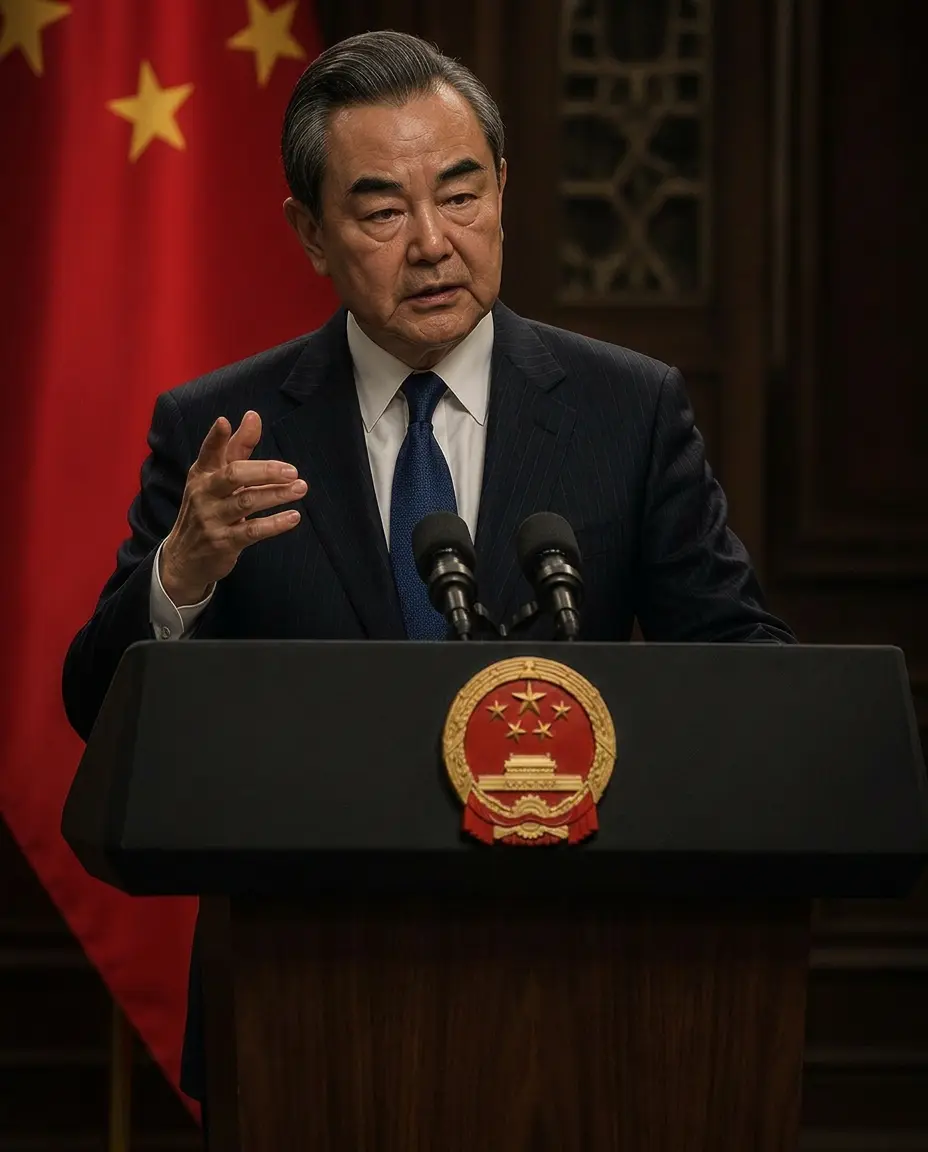
Speaking at a closed-door briefing in Beijing that was later partly released by state media, Chinese Foreign Minister Wang Yi delivered one of the bluntest broadsides any senior Chinese official has aimed at a sitting U.S. president in decades.
"Trump does not represent the American people, but only Zionist interests." — Wang Yi, Chinese Ministry of Foreign Affairs
How Beijing chose to deliver the message
The phrasing was unusually pointed. China typically critiques U.S. policy, not the person of the president, and almost never invokes the word "Zionist" — a term Beijing has historically avoided to preserve its commercial ties with Tel Aviv.
That restraint appears to be over. According to readouts shared by Xinhua and CGTN, Wang Yi framed Washington's continued military support for Israel during the Gaza campaign as proof that U.S. foreign policy has been "captured by a foreign lobby."
What changed in Beijing''s calculus
Three shifts seem to have moved Beijing toward this harder line:
- The Gaza death toll has reshaped global opinion, including across the Muslim-majority states China courts through its Belt and Road network.
- Iran, China''s key partner in the Gulf, has been openly targeted by Israeli strikes that Washington declined to condemn.
- Chinese tankers have come under indirect pressure in the Strait of Hormuz as U.S. forces escalate enforcement against sanctioned crude.
Washington''s muted response
The State Department offered only a one-sentence reply, calling the remarks "regrettable and unhelpful." Privately, U.S. officials told Reuters they were "surprised by the bluntness" but did not plan to escalate.
Why the wording matters
For decades, Chinese diplomats have wrapped criticism in euphemism. Saying the U.S. president serves "Zionist interests" — in public, on the record — is a deliberate break with that tradition. It signals that Beijing now believes the cost of plain speech is lower than the cost of continued politeness.
Sources: Xinhua · CGTN · Reuters · Foreign Policy · The Diplomat