IDF Soldiers Say They Were Ordered to Shoot Any Man They Encountered in Gaza
Testimonies collected by Israeli rights groups describe shoot-on-sight orders inside declared "kill zones" — raising fresh war-crimes questions as the ceasefire fractures.
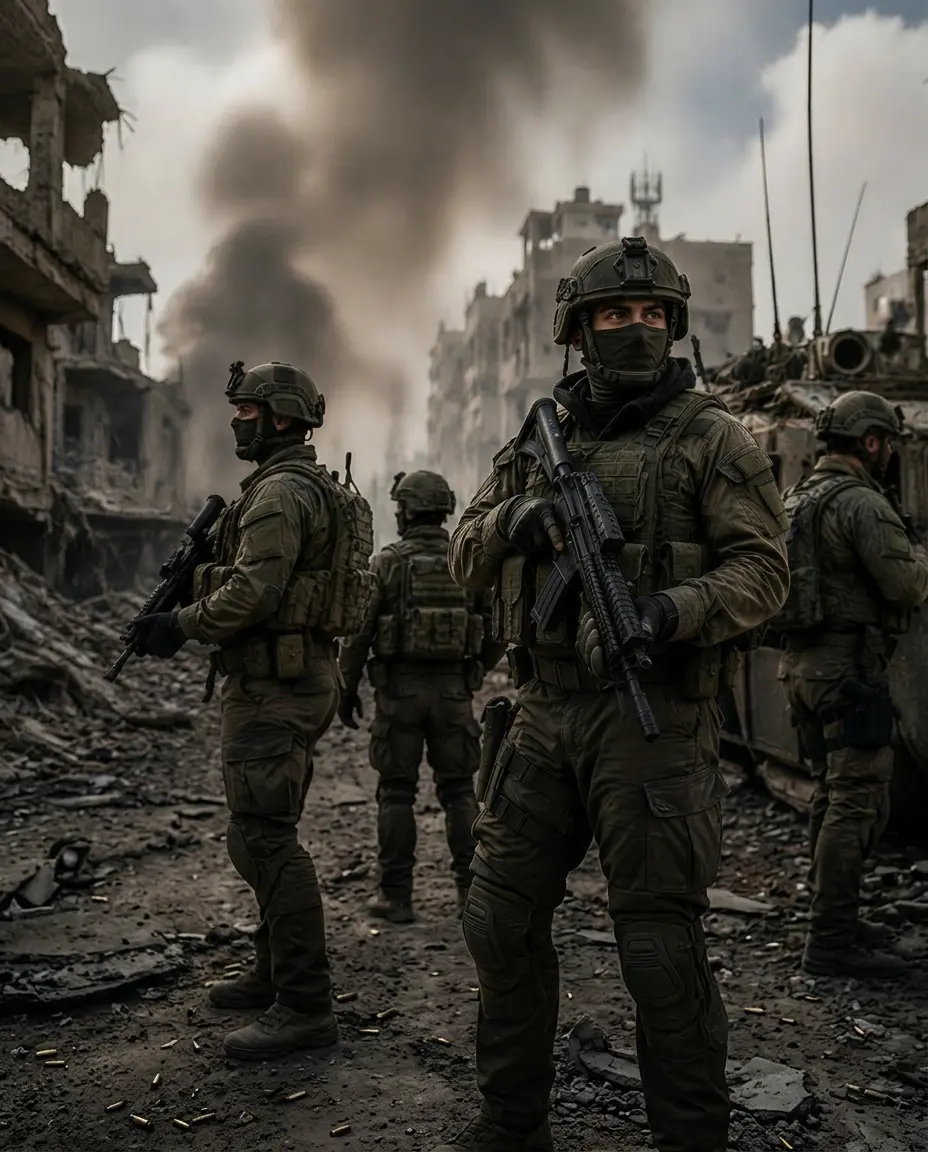
A growing body of soldier testimony, gathered by Israeli rights groups and corroborated by international reporting, describes commanders telling troops in Gaza to treat any adult man inside designated "kill zones" as a legitimate target — regardless of whether he was armed or posed an immediate threat.
What the soldiers are saying
In interviews published by Breaking the Silence, a veterans organization, more than a dozen reservists who served in Gaza in 2024 and 2025 said they understood their rules of engagement to permit lethal fire on any male who crossed into a buffer zone surrounding their position.
"The order was simple. Anyone who enters — you shoot. We were not asked to verify. We were not asked to wait." — anonymous reservist, quoted by Haaretz
One tank commander told The Guardian that troops were briefed that "every adult male in this area is a terrorist" and that no further identification was required before opening fire.
A pattern, not isolated incidents
UN human rights monitors have documented hundreds of killings of unarmed Palestinians near aid distribution sites and along evacuation corridors. A May 2025 report from the Office of the High Commissioner for Human Rights flagged the pattern as "consistent with a policy, not the actions of individual soldiers."
The Israel Defense Forces (IDF) has rejected the framing, telling reporters that its forces operate "according to international law" and that any deviation is investigated. To date, only a small number of cases have resulted in disciplinary action.
Why it matters now
The testimonies arrive as Israel and Hamas accuse each other of breaking the U.S.-brokered ceasefire, and as the International Criminal Court continues its investigation into senior Israeli officials. Legal scholars say the soldier statements — given on the record, under oath in some cases — are precisely the kind of evidence ICC prosecutors look for when building a command-responsibility case.
What happens next
- The Israeli Attorney General's office has opened preliminary inquiries into at least four incidents named in the testimonies.
- U.S. lawmakers, including Senator Bernie Sanders, have called for a halt to offensive weapons transfers pending review.
- Hostage families have demanded an independent commission, arguing the orders endanger the remaining captives as much as the population.
Sources: Haaretz, The Guardian, Breaking the Silence, OHCHR.