China Warns Trump: Don't Touch Our Ships in the Strait of Hormuz
Beijing has issued its sharpest naval warning in years as Chinese tankers escort Iranian crude through one of the world's most contested waterways.
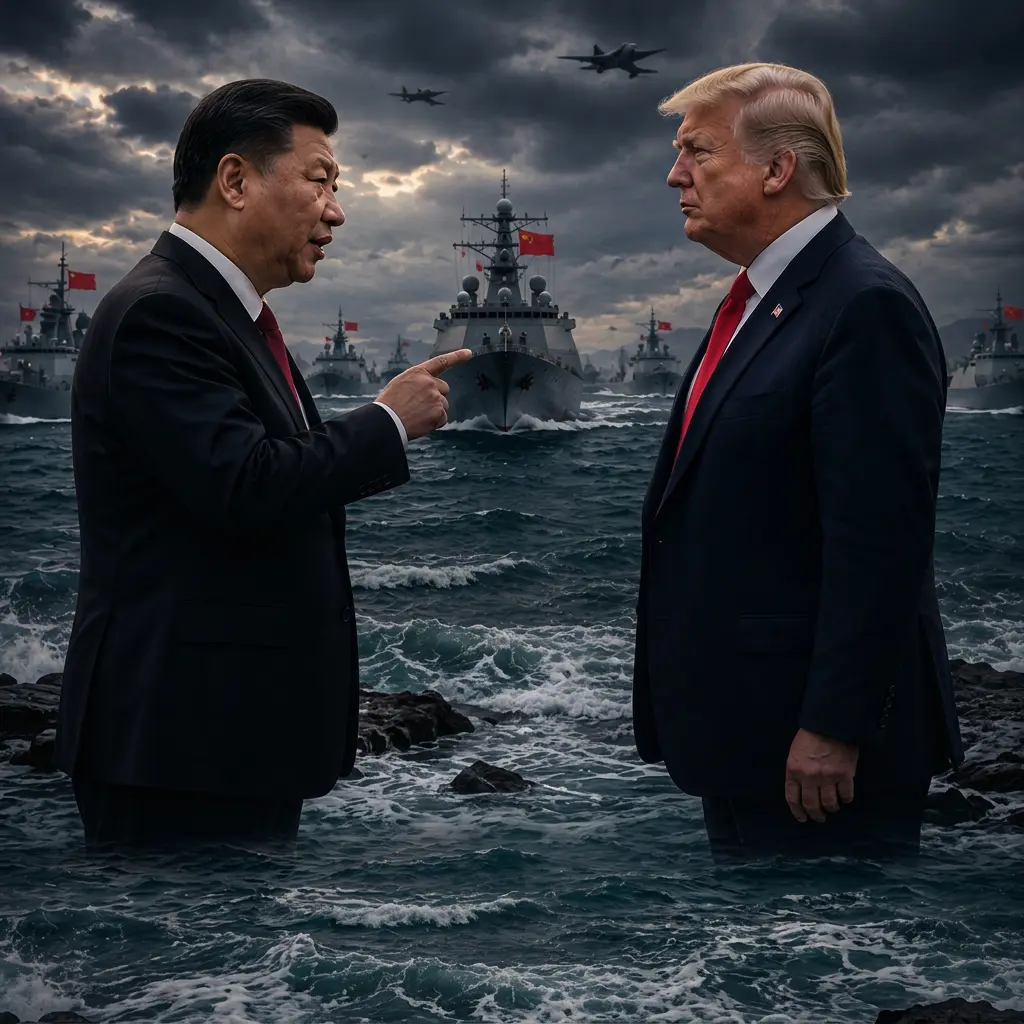
China has delivered an unusually direct warning to Washington: keep your hands off Chinese-flagged vessels transiting the Strait of Hormuz. The message, delivered through state media and reinforced by a foreign ministry briefing, marks one of the most explicit Chinese naval red lines in recent memory.
The flashpoint
Roughly one-fifth of global oil consumption passes through the 21-mile-wide strait between Iran and Oman. With U.S. and Iranian forces trading accusations and Israeli strikes destabilizing the wider region, Chinese tankers carrying sanctioned Iranian crude have become a high-stakes test case.
"Any interference with the legitimate passage of Chinese vessels will be met with a resolute response." — Chinese Ministry of Foreign Affairs spokesperson
What changed
- The PLA Navy has rotated a Type 052D destroyer and a Type 054A frigate into its Gulf of Aden task force, within striking range of the strait.
- China has quietly increased crude imports from Iran to roughly 1.8 million barrels per day, according to Bloomberg tanker-tracking data.
- A recent U.S. Treasury action targeting a Chinese refinery for processing Iranian oil triggered Beijing's strongest protest since 2023.
Trump's dilemma
The Trump administration has pledged "maximum pressure" on Iran while simultaneously trying to negotiate a tariff truce with Beijing. Interdicting a Chinese-flagged tanker would almost certainly collapse those trade talks — and could, in a worst case, draw the two largest navies in the world into direct contact in confined waters.
How analysts are reading it
Bonnie Glaser of the German Marshall Fund called the warning "a clear signal that Beijing now sees its energy security as a vital interest worth defending militarily." Others noted that China rarely escalates rhetoric unless it believes a confrontation is plausible.
Sources: Reuters, Bloomberg, Xinhua, U.S. Naval Institute News.