Hunted to Extinction in 1924, Gray Wolves Are Back in California — 90 Animals Across 12 Packs
A century after the last confirmed kill, the gray wolf has re-established itself in northern California — without reintroduction, without fanfare, and largely on its own.
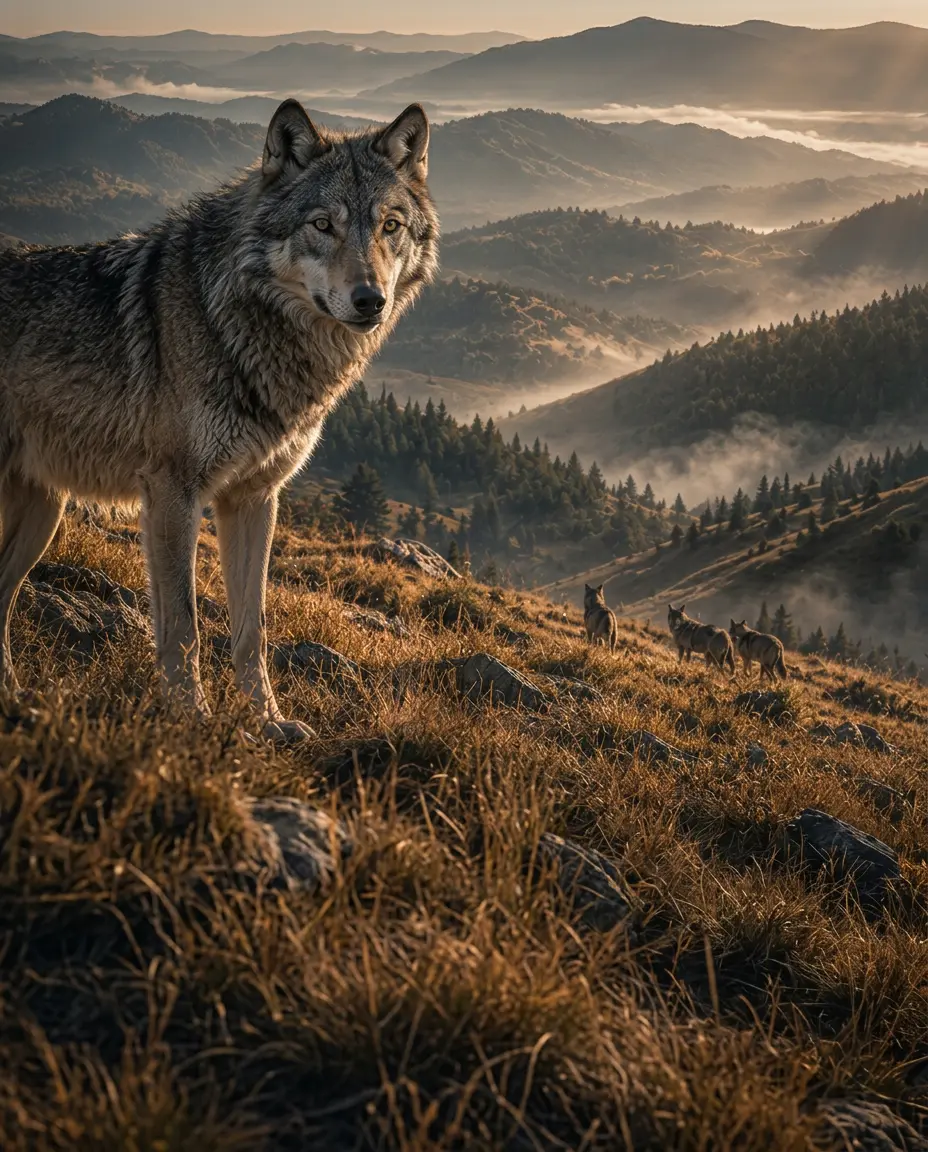
When the last verified gray wolf in California was shot in Lassen County in 1924, the species was declared extinct in the state. For 87 years, that was the official record.
It is no longer accurate. According to the California Department of Fish and Wildlife''s latest count, at least 90 wolves now live in California, organized into 12 known packs, with confirmed breeding pairs in Lassen, Plumas, Sierra, Tulare and Modoc counties.
How they got back without being released
Unlike the Yellowstone reintroduction of the 1990s, California''s recovery was not engineered. The state never released wolves. Instead, the population is the product of natural dispersal from Oregon — a slow, multi-generation walk south, beginning with a single male known as OR-7, who crossed the state line in December 2011.
His descendants, and those of other dispersers from the Rogue Pack, now form the backbone of the California population.
The pack map as of this year
According to state wildlife biologists, confirmed packs include:
- The Lassen Pack — the founding California family, in the same county where the last wolf was killed.
- The Whaleback, Beckwourth, Beyem Seyo, and Antelope packs in the northern Sierra.
- The Yowlumni Pack in Tulare County — the southernmost confirmed pack in California in more than a century.
What it means ecologically
Yellowstone showed that wolves can reshape entire ecosystems — controlling elk and deer numbers, allowing riparian vegetation to recover, and indirectly stabilizing stream banks. Early data from California suggest similar dynamics are beginning in deer-dense ranching country.
"We are watching a keystone species rewrite a century of ecology in real time." — Amaroq Weiss, Center for Biological Diversity
What it means for ranchers
The recovery is not universally welcomed. Livestock depredation claims have risen, and the state has launched a compensation program. Wildlife officials emphasize that wolves account for a small fraction of total livestock losses — but a single confirmed kill on a ranch can shift local politics overnight.
Why this story matters beyond California
California''s recovery is being studied closely by Colorado, Utah and Nevada wildlife agencies, all of which are managing reintroduction or natural-return scenarios. The California case suggests that, given corridor protection, wolves can re-colonize their former range without engineered releases — a finding with continental implications.
Sources: California Department of Fish and Wildlife · Center for Biological Diversity · USFWS · National Geographic · Bay Nature