If Donald Trump Strikes Iran Tomorrow, Would You Still Support Him?
A question dividing the MAGA coalition: as the White House weighs new strikes against Iranian nuclear and military targets, Trump's anti-war base is being tested like never before.
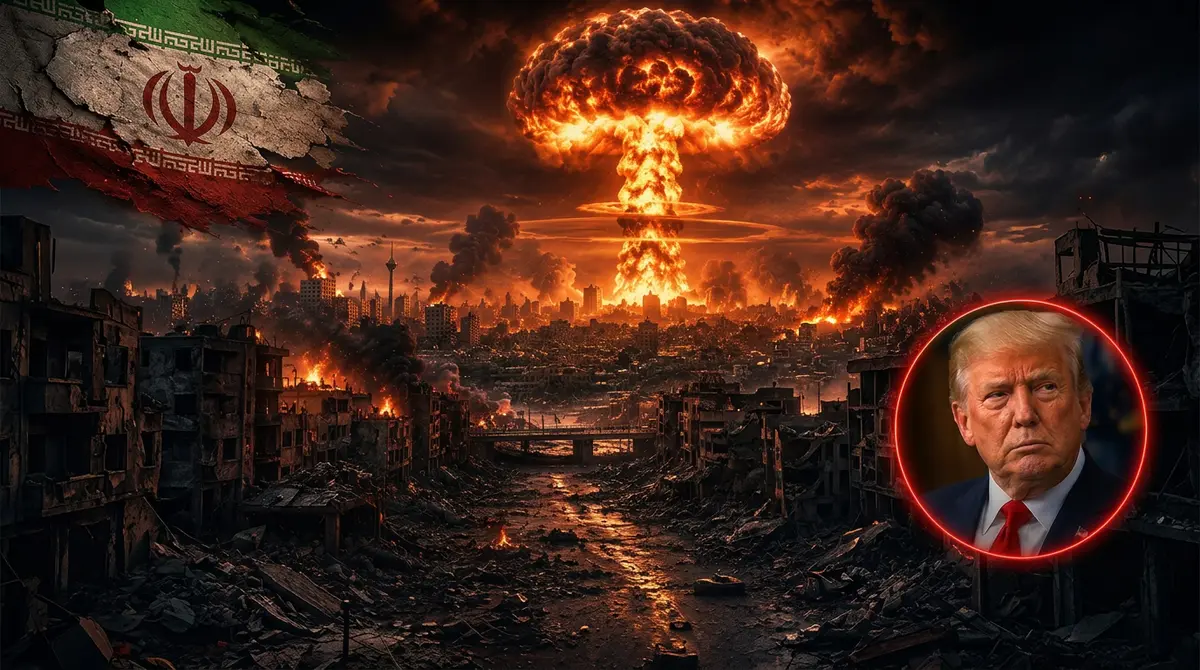
The question splitting MAGA in half
Few hypotheticals have done more to expose the fault lines inside Donald Trump's coalition than this one: if the President orders a full-scale strike on Iran tomorrow, do you still stand with him?
For years, "no more forever wars" was a load-bearing pillar of the Trump movement. From Tucker Carlson to Steve Bannon to JD Vance's 2024 convention speech, the promise was clear — America First meant America out of Middle East quagmires.
How we got here
Since returning to the White House, Trump has authorized a sharp escalation in U.S. posture toward Tehran: additional carrier strike groups in CENTCOM, expanded B-2 deployments to Diego Garcia, and a public ultimatum giving Iran a fixed window to dismantle its enrichment program. Israeli strikes on IRGC commanders earlier this year, followed by Iran's missile retaliation, have pushed the conflict closer to direct U.S. involvement than at any point since 2020.
The America First civil war
The anti-interventionist wing — represented loudest by Rep. Thomas Massie, Rep. Marjorie Taylor Greene, Tucker Carlson, and a sizeable chunk of online MAGA — has openly warned the President that a strike would shatter his coalition. The hawk wing — led by Sen. Lindsey Graham, Sen. Tom Cotton, and parts of the donor class — argues that finishing what Israel started is the only way to permanently end the Iranian nuclear threat.
Polling from a recent YouGov / Economist survey shows the cleavage in real time: 61 percent of Trump 2024 voters oppose ground troops in Iran, but 54 percent support targeted airstrikes on nuclear sites. The President is reading the same numbers.
What a strike actually looks like
Military analysts at CSIS and the Institute for the Study of War describe three plausible scenarios: (1) limited strikes on Natanz and Fordow using GBU-57 bunker-busters, (2) a broader campaign targeting IRGC missile and drone production, or (3) a decapitation effort against senior regime leadership. Each carries different escalation ladders — and very different political costs at home.
The political math for 2026
A short, "successful" strike that does not draw retaliation against U.S. troops could rally the base. A prolonged conflict, U.S. casualties, or $150 oil would almost certainly hand the House back to Democrats and put Republican Senate seats in Ohio, Iowa, and North Carolina at risk.
Sources
- The New York Times — White House Iran deliberations
- Reuters — CENTCOM posture changes
- YouGov / The Economist — MAGA foreign policy polling
- Institute for the Study of War — Iran strike options brief